Latest Battery Technology Shaping Energy and Skills Demand


In this article:
The latest battery technology is reshaping how energy is stored, distributed, and deployed across Europe. Across a growing range of applications, progress in battery development is accelerating while becoming more complex as performance expectations rise alongside sustainability and regulatory pressures.
As we work closely with organisations developing and scaling new battery solutions, we see how advances in battery technology are influencing not only product roadmaps, but also the future hiring needs. Understanding where innovation is heading is increasingly important for businesses to reduce risks later on, and for professionals looking to move into a sector that’s evolving quickly.
How the Latest Battery Technology Is Reshaping Energy Storage and Innovation
Lithium-ion batteries continue to underpin most commercial energy storage systems, but the industry is moving beyond incremental improvement. Constraints around raw material supply, safety considerations, charging speed, and lifecycle performance are pushing manufacturers and researchers to explore new materials and smarter system architectures.
A common question we hear from clients is ‘What is the new battery technology most likely to deliver real-world impact in the near term?’ In practice, there is no single answer. To give context – progress is happening across multiple fronts at once, with different technologies emerging and evolving all the time to solve different commercial and technical challenges. Quite simply, we could name a particular technology as ‘the one to watch’ right now, and the situation could have changed by tomorrow. This is why the latest battery technology is defined less by one breakthrough and more by coordinated advances across materials science and manufacturing, alongside broader system design considerations.
As innovation continues to accelerate, access to the right specialist talent becomes critical. We work closely with organisations across the energy and mobility landscape to support teams working across research and engineering. Learn more about how we support hiring in this space on our Battery Tech & EV sector page.
Solid-State Batteries and the Push for Higher Energy Density
Solid-state batteries (SSBs) are widely regarded as one of the most significant areas of development within the latest battery technology. By replacing liquid electrolytes with solid materials, these batteries offer improved thermal stability and the potential for higher energy density compared to conventional lithium-ion systems.
Interest in solid-state batteries is driven by practical considerations rather than speculation:
- Improved thermal stability, particularly in automotive and industrial environments
- Higher potential energy density that supports longer range and lighter packs
- Durability under demanding charge and discharge conditions
- Greater design flexibility for next-generation electric vehicles and compact devices
Despite this momentum, commercial deployment remains complex. Scaling production, managing cost, and proving long-term reliability are still active challenges. As a result, development timelines vary widely, and many organisations are investing cautiously while continuing parallel work on existing technologies.
From a hiring perspective, solid-state programmes are increasing demand for specialists in materials engineering and electrochemistry, with experience supporting full battery system integration. We are seeing companies build capability early to reduce future delivery risk as this area of latest battery technology matures.

Sodium-Ion Batteries and the Drive for Sustainable Alternatives
As supply chain resilience becomes a strategic concern, sodium-ion batteries are gaining attention as part of the broader conversation regarding the latest battery technology. Sodium is more abundant and geographically diverse than lithium, making it attractive for applications where cost control and sustainability are prioritised over maximum energy density.
While sodium-ion batteries currently offer lower energy density than lithium-based systems, they perform reliably across wider temperature ranges and align well with grid-scale storage and renewable energy integration. For Europe, where energy security and sustainability targets are tightly linked, this makes sodium-ion development particularly relevant.
Ongoing research focuses on improving cycle life, efficiency, and manufacturability. As progress continues, sustained hiring demand is emerging across research and optimisation roles. This reflects how battery innovations are increasingly shaped by environmental and regulatory considerations, not just performance metrics.
As development activity continues to increase, demand for specialists across research and pilot manufacturing, alongside optimisation-focused roles, is growing. You can view current opportunities and learn more about roles supporting this work on our jobs page.
New Battery Materials Transforming Electric Vehicle Performance
Electric vehicle development remains one of the strongest drivers of battery technology investment. Advances in anode and cathode materials are helping increase capacity while reducing charging times and degradation, directly influencing vehicle range and usability.
Silicon-based anodes, in particular, offer significantly higher theoretical capacity than traditional graphite. The challenge lies in managing mechanical stress during charge cycles, which can lead to degradation if not carefully controlled. Progress in material engineering and composite design is already influencing next-generation EV platforms and supply chain decisions.
Battery engineers working in this space increasingly need to balance laboratory research with testing protocols and regulatory compliance. As EV technologies move from development into scaled production, system-level understanding becomes just as important as material-level expertise.
Fast Charging and Intelligent Battery Management Systems
Charging speed has become a defining factor in battery adoption. Fast charging is no longer viewed as a standalone feature, but as a system-wide challenge involving battery chemistry and thermal management, alongside power electronics and software.
Ultra-fast charging depends on careful control of heat and current flow to protect battery health over time. Intelligent battery management systems now play a central role, using software and data-driven models to balance performance, safety, and longevity in demanding operating conditions.
This convergence of hardware and software is driving demand for hybrid skill sets that combine battery engineering with embedded systems, data analysis, and control architecture expertise. It also highlights how modern battery technology development increasingly relies on cross-disciplinary collaboration.
As charging systems become more software-driven and interconnected, organisations increasingly rely on specialist research and engineering expertise. We work closely with teams operating across hardware, software, and applied research to support hiring in this space. Learn more on our Industry Research page.
Battery Recycling and the Circular Economy in Europe
Sustainability is now central to the latest battery technology roadmap. European regulation is accelerating investment in recycling, traceability, and closed-loop supply chains to reduce environmental impact and strengthen material availability.
Battery recycling supports both sustainability goals and long-term supply resilience by recovering critical materials and reducing dependency on new extraction. For manufacturers, this is becoming a commercial and regulatory requirement rather than a future consideration.
Across the European battery ecosystem, current focus areas include:
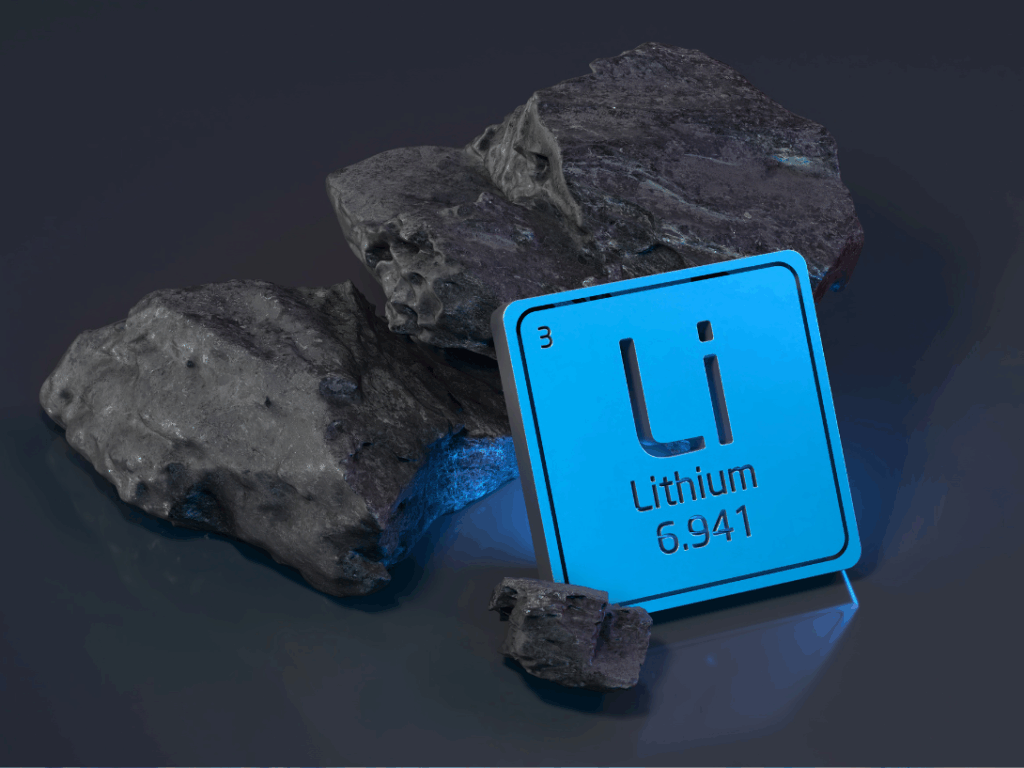
- Recovery of lithium, cobalt, nickel, and other critical materials
- Development of second-life energy storage systems
- Compliance with evolving EU battery regulations and reporting requirements
- Integration of recycling processes into manufacturing strategies
These priorities are shaping demand for process engineers, sustainability specialists, and professionals with experience operating in regulated industrial environments, reinforcing the close link between the latest battery technology and workforce planning.
What Is the Future of Battery Technology for the European Workforce?
So, what is the future of battery technology in practical terms? It is more specialised, more interdisciplinary, and increasingly dependent on long-term skills planning. Innovation is progressing across multiple fronts at once, making collaboration between disciplines essential.
From our perspective, organisations best positioned for success are those investing early in the right technical capability. This includes not only engineers and scientists, but also professionals who can bridge research, production, and commercial deployment.
As the latest battery technology continues to evolve, recruitment strategies must evolve alongside it. We support companies across Europe by connecting them with talent that understands both the science behind modern battery systems and the challenges of scaling them commercially.
If you’re planning ahead for evolving technical requirements or scaling specialist teams, we’re happy to discuss how we can support your hiring goals. Get in touch with us to start the conversation.