Recruitment Scams: Spotting Job Frauds and Fake Job Offers

In this article:
Recruitment scams are a continuously growing threat, with thousands of job seekers encountering fake job postings, turning digital recruitment into a “minefield” for anyone applying for roles across Europe and beyond.
What Recruitment Scams Look Like
Recruitment scams are rarely obvious at the start. Job listings can look polished and the recruiter can appear confident and credible. This is what makes employment scams so effective, especially when scammers mirror real hiring language.
From our experience in tech recruitment, we see fraud patterns that repeat across industries and regions. The details vary, but the pattern stays consistent. They create a sense of urgency and avoid verification while pressuring you to act before you ask questions.
Common scam signals
- Pressure to accept quickly – “Start this week” and “final approval today” messages that arrive after minimal screening.
- Unusual communication channels – Requests to move to a private app or a generic inbox unrelated to the employer.
- Pay-to-work demands: Requests for equipment or processing fees as part of securing a job offer.
- Unverifiable employers – Company details that are inconsistent or mismatched across profiles.
- Identity and document traps – Asking for unnecessary personal information including payment card details or sensitive IDs early into the hiring process.
Even when a recruiter seems credible, job fraud can still hide inside the process. One reason is that fraudulent recruitment frequently uses legitimate role descriptions to bypass scepticism.
How Fake Job Offers Spread Online
Online job scams often begin with a listing or a personalised direct message. We often see scammers referencing a similar profile to make the outreach feel relevant and legitimate. Their goal is to make the interaction feel routine enough that candidates continue sharing information. When these scammers escalate, it usually happens in the smallest, most believable steps.
What scammers do after you reply
- They confirm “interest” immediately and request a quick call or short screening.
- They send documents and links that may be used for data collection or credential harvesting.
- They ask for details that are not needed yet, such as bank information, ID scans, or verification payments.
- They accelerate the offer once they have your trust and contact information.
In our experience, candidates often believe they are speaking directly to a company. But in some cases, candidates may already be engaging with a fraudulent operation.
Phishing Schemes Impersonating USA Tech RecruitAs an example of how these scams evolve, we have also seen cases where scammers impersonate USA Tech Recruit to approach candidates with unsolicited job offers. These often come via WhatsApp or text, promoting remote roles that require little to no experience, and may progress into fake “interviews” or “training” processes designed to collect personal information or request payments or even cryptocurrency transactions. In some cases, offers are made quickly without a formal process, or communication comes from unofficial email domains rather than company channels. These are not practices used by our teams. You can read the full warning and key red flags here. |
If you’re looking for genuine tech opportunities, explore our latest roles and speak directly with our consultants. Every position we work on is part of a verified, transparent hiring process so you know exactly who you’re dealing with from the start.
How to Verify a Real Recruiter in Tech
Recruitment agency scams are especially common when the target role is in high-demand tech industries, since candidates move fast. Scammers understand that time pressure can outweigh careful checks, particularly for AI & Machine Learning, semiconductors, quantum computing, wireless and IoT, cloud computing, and other specialised industries.
This is why at European Tech Recruit, we built our candidate experience around clear communication and transparency. In a market where automation is increasingly used, we prioritise direct, human communication and work in a way that is easy to verify.
Verification steps you can take right away
- Ask for the official company email domain, and not a “free email” address, nor a domain you cannot trace.
- Request a job requisition reference because a real employer can usually provide a reference code or internal hiring process details.
- Check the recruiter’s identity by reviewing consistent details across trusted platforms like LinkedIn, and using official company profiles (such as ours) as a reference point.
- Check whether the role aligns with the company’s real work and structure, and ask the recruiter to clarify anything that does not add up.
- Verify the interview format since legitimate processes use normal scheduling and clear meeting links.
We recommend treating every step like a checklist if you’re unsure. Through this mindset, you can protect yourself from fraudulent attempts that rely on confusion.
If you want to understand how we work in practice, you can review our client and candidate testimonials. They reflect the importance we place on clear communication and transparency throughout the recruitment process.
Common Job Interview Scam Tactics
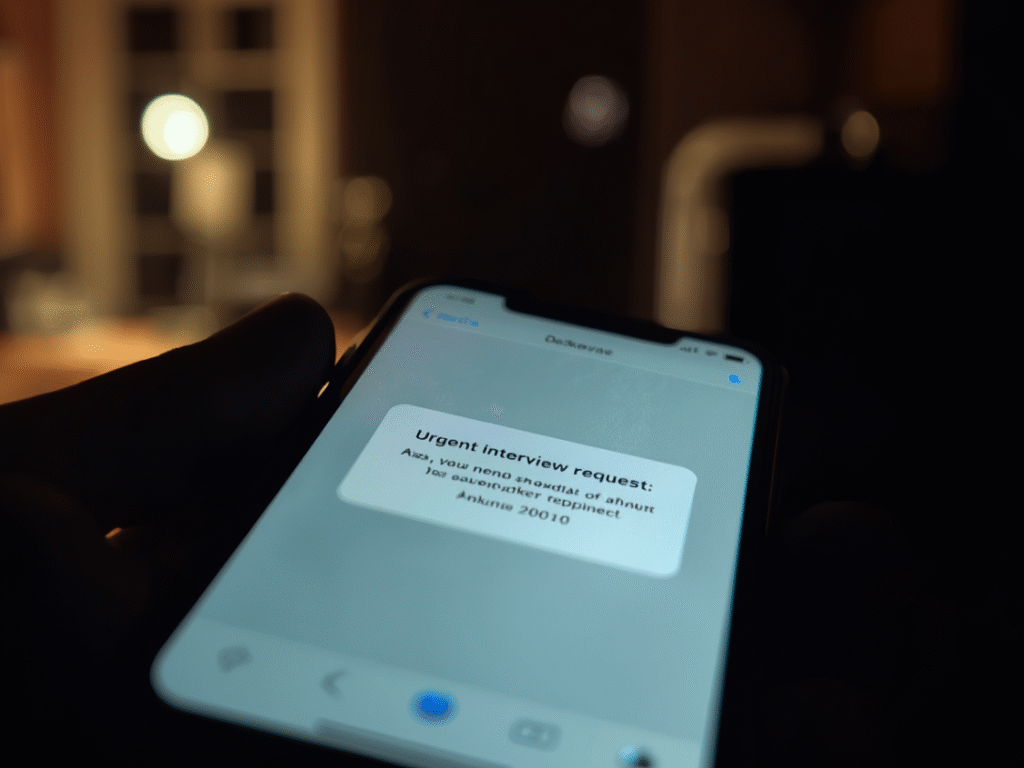
Interview scams can still occur even when a recruiter invites you to a video call. Scammers often include steps like assessments or “verification” requests to make the process feel legitimate, and these can appear later in the journey when candidates are more likely to trust it.
Scammers often control the timeline, making it seem like you have already been approved, then quickly asking you to complete the next step before you can question it.
Red flags during interviews
- The interview skips depth, with little discussion of the role or technical requirements.
- You are moved forward unusually quickly through the interview process, sometimes to the offer stage after minimal interaction.
- Questions about the company or role are deflected or answered vaguely.
- Interviewers rely heavily on scripts, avoiding detailed or role-specific discussion.
- Contract details are inconsistent or do not align with the responsibilities discussed.
When interview steps drift into data collection or payment collection, you may be facing fraudulent recruitment rather than legitimate hiring.
What to Do If You Suspect a Recruitment Scam
If you suspect that you are being targeted by a recruitment scam, we recommend stopping the process and protecting your accounts. This should be treated like an incident response and not like a misunderstanding you need to fix politely.
Scammers often try to resolve concerns quickly, offering reassurance while continuing the fraud. A calm, documented approach works better than back-and-forth messages.
Immediate actions
- Do not send ID documents, any images or recordings of yourself, payment details, or access credentials.
- Save evidence including screenshots, email headers, chat logs, and any files the sender requested.
- Verify with a trusted channel like a legitimate employee from your prospect company by using their official contact details to cross-check.
- Report to the platform and block the sender across all communication channels.
- Secure your accounts by changing passwords if you shared any credentials and watch for unusual login attempts.
Financial and personal safety checklist
- Do not provide details for temporary payroll setup, whether it be your PayPal email address or bank account number.
- Do not pay for any equipment or employment processing fees. Remember that legitimate employers or recruitment agencies more often do not ask job hunters for payment.
- Do not sign documents that you cannot read clearly or that come without verifiable employer context.
- Be vigilant with links that ask you to confirm your identity or upload documents, especially if they’re asking for documents that have your personal details.
These steps can help you avoid the next stage of employment scams, where data theft and financial loss follow quickly.
If you want to approach interviews with more confidence, we recommend reviewing the right questions to ask during a job interview. Knowing what to ask can help you better assess opportunities and identify anything that does not feel quite right.
How European Tech Recruit Reduces Risk for Candidates
We know recruitment scams feel confusing because legitimate hiring can involve similar steps, like email coordination and CV exchanges. That is why our process focuses on clarity and real human communication.
We are based in Brighton, UK but we support candidates and clients across multiple regions with a team of professional consultants. Our approach is built to deliver results even when dealing with technical challenges and tight schedules, but it never trades integrity for speed.
What we do differently
- Structured communication – We keep everything transparent so you always know what happens and why.
- Clear role alignment – We focus on real technical requirements and realistic expectations.
- Verification mindset – If something feels off, we pause and verify the context.
When you compare this to employment scam tactics, the difference is clear. Legitimate recruitment is transparent while fraudulent offers depend on confusion.
Protect Your Career From Recruitment Scams
Recruitment scams are a threat to both your finances and your personal data. We have seen job fraud take many forms, from fake job offers and recruitment agency scams to job interview scam tactics that appear convincing because they mimic real hiring steps.
The best protection is a verification-first approach. If something feels rushed or payment-heavy, pause and validate. Stop the process if you suspect fraudulent recruitment. You must also save the evidence and use trusted channels to confirm the employer.
At European Tech Recruit, we believe technical hiring should be clear, human, and grounded in integrity. That is how we help candidates move forward with confidence, even in an era where online job scams are actively evolving.