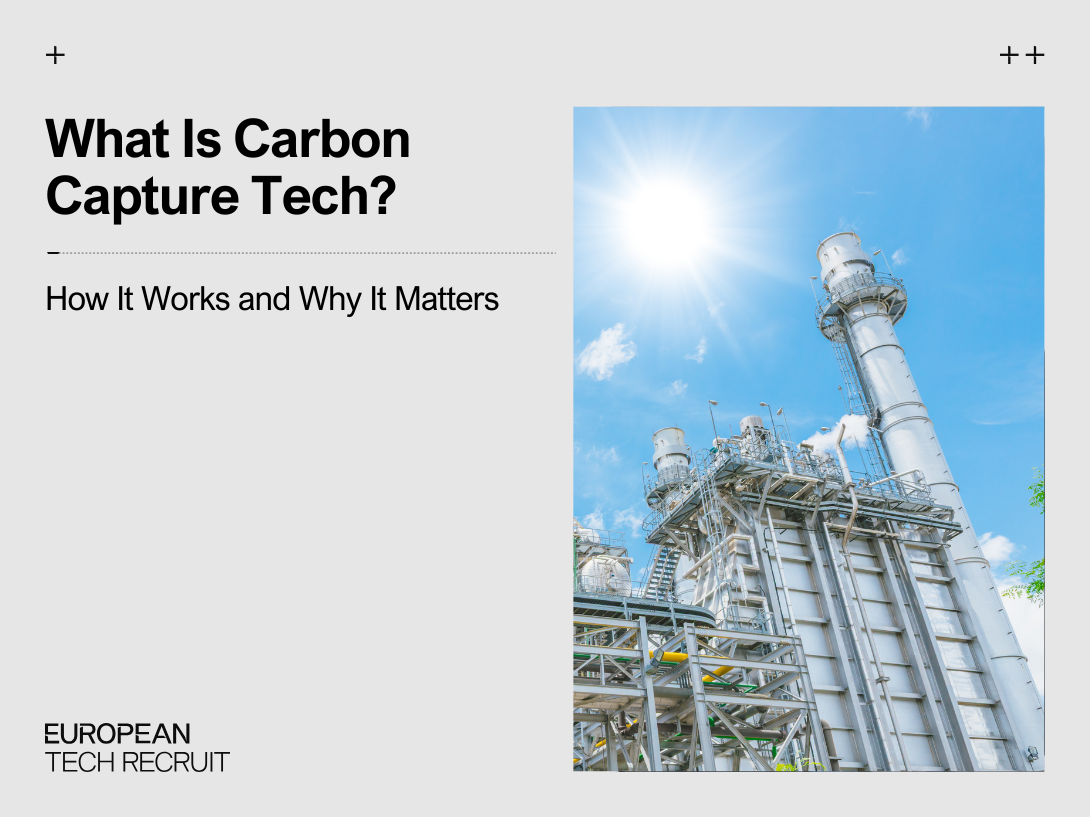
What Is Carbon Capture Tech? How It Works and Why It Matters

In this article:
Across the European technology hiring market, we are seeing increased client demand linked to decarbonisation, advanced energy systems, and climate technology innovation – but what exactly are these technologies, what do they accomplish, and what skills do you need to work in the industry? This guide will help you understand what carbon capture tech is and how it fits into live engineering and infrastructure projects.
Carbon Capture: A Basic Definition
The term ‘carbon capture’ refers to technologies that reduce the amount of carbon dioxide released into the atmosphere during power generation and industrial processes. As these systems scale, they are creating new specialist hiring requirements across engineering, materials science, software, modelling, and process optimisation.
What Is Carbon Capture and Storage (CCS) in Clean Energy?
What is carbon capture and storage in practical terms? It is a group of technologies that capture CO2 emissions at source, then transport and store them in stable underground formations. Typical storage locations include depleted oil and gas reservoirs or deep saline aquifers.
From a technology hiring perspective, these projects often combine multiple disciplines: subsurface engineering, chemical processing, monitoring systems, and data modelling. That cross-disciplinary nature is one reason why companies in the industry frequently require niche specialists rather than generalist engineers.
For clean energy and heavy industry employers, capture and storage support emissions targets while allowing critical infrastructure to continue operating during transition periods.
What Does Carbon Capture Tech Do in Industrial Systems?
What does carbon capture do? At a practical level, it removes CO2 from exhaust or process streams before release. However, the engineering behind that outcome is more involved.
Carbon Capture systems may use solvents, membranes, or advanced materials to separate carbon dioxide from other gases, and these must be integrated into existing plant architecture or designed into new facilities from the start.
Because of this, employers often look for engineers who understand both core process science and real-world industrial constraints. We regularly see hiring briefs that combine process knowledge with controls, simulation, or digital plant systems experience.
If you’re developing carbon capture or wider clean energy capability, we support companies across Europe with targeted specialist hiring. Learn more about our renewable energy recruitment.
How Carbon Sequestration Supports Clean Energy Goals
Sequestration is the storage phase that follows capture. This is where CO2 is compressed, transported, and injected into geological formations designed for long-term containment.
Sequestration supports decarbonisation strategies in sectors where emissions are difficult to eliminate quickly, including cement, steel, and certain chemical processes.
However, we can’t forget that long-term storage performance, monitoring systems, and regulatory compliance frameworks are still evolving. That uncertainty adds further technical depth and hiring complexity to many projects.
How Does Carbon Capture Work? Common Carbon Capture Methods
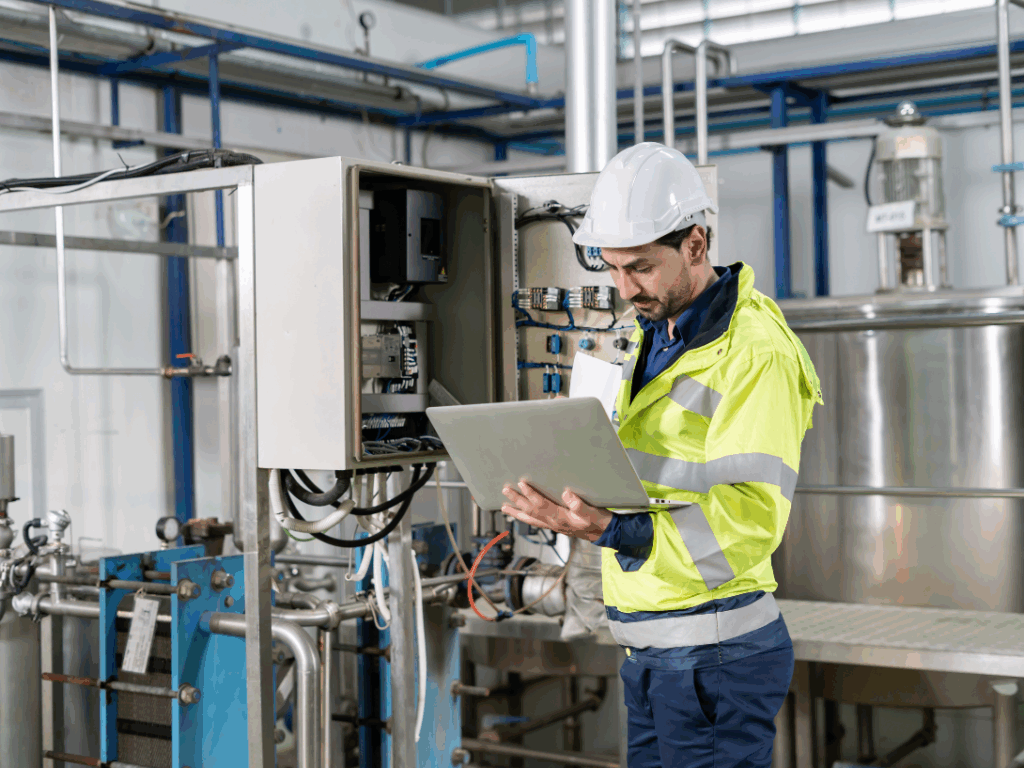
So, how does carbon capture work at the system level? There are several established approaches, and each comes with different engineering and operational requirements.
- Pre-combustion capture: CO2 is removed before fuel is burned. Typically used in gasification or reforming environments and more common in new-build facilities.
- Post-combustion capture: CO2 is separated from flue gas after combustion. Often selected for retrofit projects because it can be added to existing plants.
- Oxy-fuel combustion: Fuel is burned in oxygen rather than air, producing an exhaust stream with a higher CO2 concentration and simpler separation.
From a recruitment standpoint, each pathway drives different skill demand across process design, retrofit engineering, modelling, and plant integration.
Pre-Combustion vs Post-Combustion Capture: Hiring Impact
Pre-combustion systems usually require purpose-built infrastructure and early-stage design input. That increases demand for senior design engineers and technical architects.
Post-combustion retrofit projects often require integration specialists who can work within legacy systems. These hires need practical plant knowledge alongside capture technology understanding.
This distinction matters for employers planning workforce strategy as much as for engineers evaluating career direction.
For organisations upgrading or retrofitting complex industrial systems, we support specialist hiring across automation and smart manufacturing. Learn more about our Industry 4.0 recruitment here.
Where Is Carbon Capture Used in Industry?
Carbon capture is already being deployed in selected high-emission industries, many of which sit within our broader technology recruitment focus areas.
Industries Using Carbon Capture Technologies
- Power generation facilities upgrading emissions control
- Cement production plants addressing process CO2 output
- Steel manufacturing sites reducing industrial footprint
We are also seeing related activity across hydrogen, advanced fuels, and industrial decarbonisation platforms – all areas where specialist technical talent is limited, and highly sought after.
Carbon Capture and Carbon Utilisation
Some projects move beyond storage into reuse, which also helps explain why carbon capture is important in commercial as well as environmental terms. In carbon capture and utilisation models, captured CO2 becomes an input for fuels, materials, or chemical production, rather than a waste by-product being stored underground.
These programmes often blend chemical engineering, materials science, and advanced manufacturing disciplines. Hiring needs, therefore, tend to be narrow and experience-led, with employers prioritising candidates who have worked on applied industrial or clean-tech systems.
For candidates, this creates opportunities to work on commercial climate technology projects rather than purely theoretical research.
How Effective Is Carbon Capture in Practice?
Time to answer the big question: How effective is carbon capture under real operating conditions? Capture rates can be high when systems are properly designed, integrated, and maintained, but performance varies depending on the technology used and the industrial environment where it is deployed.
In practice, outcomes are influenced by engineering design quality, operational discipline, monitoring approaches, and the long-term integrity of storage solutions. Because of these technical variables, carbon capture projects typically require experienced specialist leadership and applied industrial expertise rather than purely theoretical knowledge.
Specialist Roles Emerging in Carbon Capture Projects
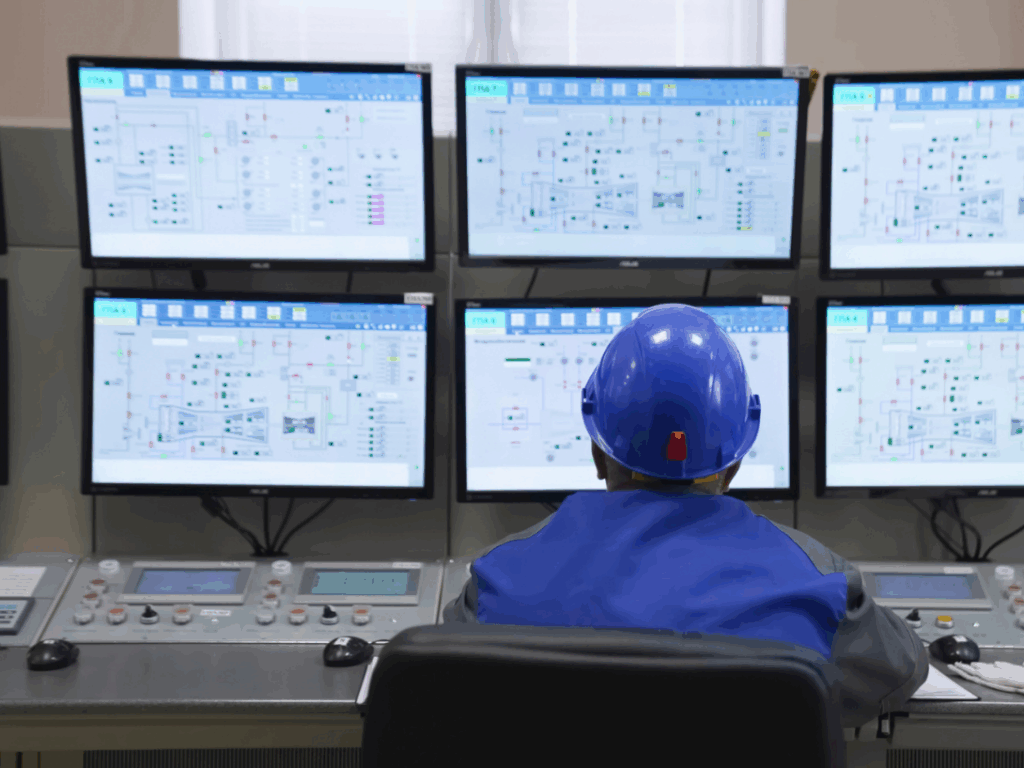
We are seeing increased hiring demand across European carbon capture and industrial decarbonisation programmes, particularly as projects move from research into operational deployment. These initiatives rarely rely on generalist engineering profiles. Instead, employers are looking for specialists with applied, sector-specific experience.
Typical in-demand roles include:
- process and chemical engineers working on capture systems
- carbon capture and separation technology specialists
- subsurface and storage analysis professionals
- modelling and simulation engineers supporting plant performance
- technical project leaders with industrial infrastructure experience
From a recruitment perspective, the hiring landscape is becoming more complex. Many of these skill sets sit across multiple technical domains, and suitable candidates are often already engaged in niche research or live industrial programmes.
The available talent pool is limited and highly competitive. Successful hiring in this space depends on targeted search, accurate technical qualification, and close alignment with project requirements rather than broad CV matching – particularly across European clean-tech clusters where demand continues to outpace supply.
If you’re a specialist engineer or technical professional interested in carbon capture and clean-tech projects, you can view the latest opportunities on our technology jobs board.
What Is Carbon Capture Tech’s Future Looking Like In Europe?
European carbon capture activity continues to expand through public funding and cross-border research, along with private investment. Innovation is focused on efficiency and cost reduction, alongside stronger monitoring and verification standards.
Many programmes increasingly use AI-based optimisation and advanced materials, alongside digital plant engineering. These overlaps further increase the need for niche technical talent. For organisations building teams in these areas, the hiring strategy needs to be as specialised as the technology itself.
For organisations building specialist teams in carbon capture and advanced technologies, we deliver targeted, partnership-led hiring solutions. Explore our client services here.